
MISSION
Microbes catalyze a huge diversity of chemical reactions that are important to human health and essential to the persistence of life on this planet. But no one microbe can do it all. Our lab is interested in how limitations placed on cells by physics, chemistry, and biology influence the scope of what microbes do, how fast they do it, and how these factors affect the organisms around them.
Many of these important microbial reactions involve nitrogen. We specifically study denitrification, the anaerobic respiration of nitrogen-oxides, which plays a central role in Pseudomonas aeruginosa pathogenesis, gut dysbiosis, and environmental nitrogen cycling. The denitrification pathway is made up of four sequential reactions, but most organisms specialize in only some of them. This is puzzling, given that running the complete pathway extracts more energy per nitrate. We think an explanation lies in the tradeoffs cells face when balancing competing demands given finite resources (i.e., proteome space, reducing equivalents, carbon, and the capacity to respond to stress). Our goal is to uncover the fundamental basis for tradeoffs in denitrification, the costs and benefits of specializing, and the consequences for microbial communities and hosts.
We focus experimentally on pseudomonads, which, in addition to being relevant to human health and industry, are genetically tractable and exhibit enormous natural diversity in which denitrification steps they can do. We take a systems biology perspective to connect intracellular tradeoffs to growth, metabolic flux, and the ecology of denitrifying communities.
NEWS
- March 2026: We welcome Arthur Franklin who will join the lab as a Microbiology PhD student. Arthur will work on microbial interactions in biofilms.
- Jan 2026: We are super excited to welcome Andrew Schwieters to the lab as a postdoctoral researcher. Andrew will develop new synthetic biology tools for studying bacterial denitrification.
- Aug 2025: Big congrats to Bryce Guidry for successfully completing his PhD candidacy examinations in the Biophysics Graduate Program.
- May 2025: We welcome summer REU student Emily Yoon to the lab. Emily is a rising junior at Williams College, and will be working on enrichhing denitrifying biofilms.
- February 2025: We are thrilled to have Dominic Cipiti joining the lab as a Microbiology PhD student. He will take a resource-allocation perspective to the study of denitrification physiology.
- January 2025: We welcome Bryce Guidry and Anja Steinert to the lab. Bryce joins as a PhD student through the Biophysics Graduate Program and will be working on single-cell approaches for studying bacteria. Anja will be taking over as lab manager.
- July 2024: Our paper on how interactions shape denitrifying communities in the soil microbiome is now out in Nature Microbiology.
PEOPLE
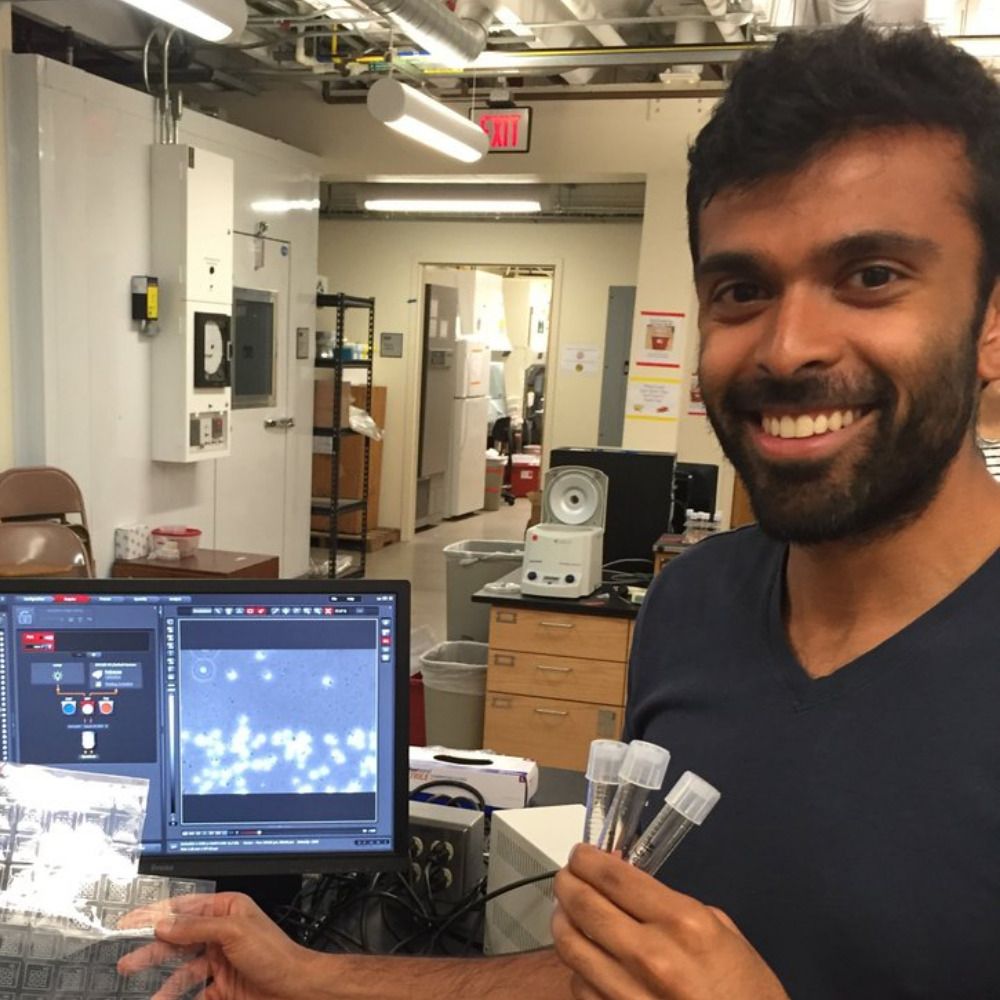
Karna Gowda, PhD [CV]
Principal InvestigatorDepartment of Microbiology
Biophysics Graduate Program
The Ohio State University



Dominic Cipiti
PhD Student, MicrobiologyBS in Biology, Baldwin Wallace University

Arthur Franklin
PhD Student, MicrobiologyBS in Biology, The Ohio State University

Bryce Guidry
PhD Candidate, BiophysicsBS in Biophysics, Emory University

Anja Howard
Lab ManagerBS in Biology, The Ohio State University
Abby Ralph
Undergraduate Research Assistant
Andrew Schwieters
Postdoctoral ResearcherBS/BA in Biology and Chemistry, University of Minnesota, Morris
PhD in Microbiology, The Ohio State University
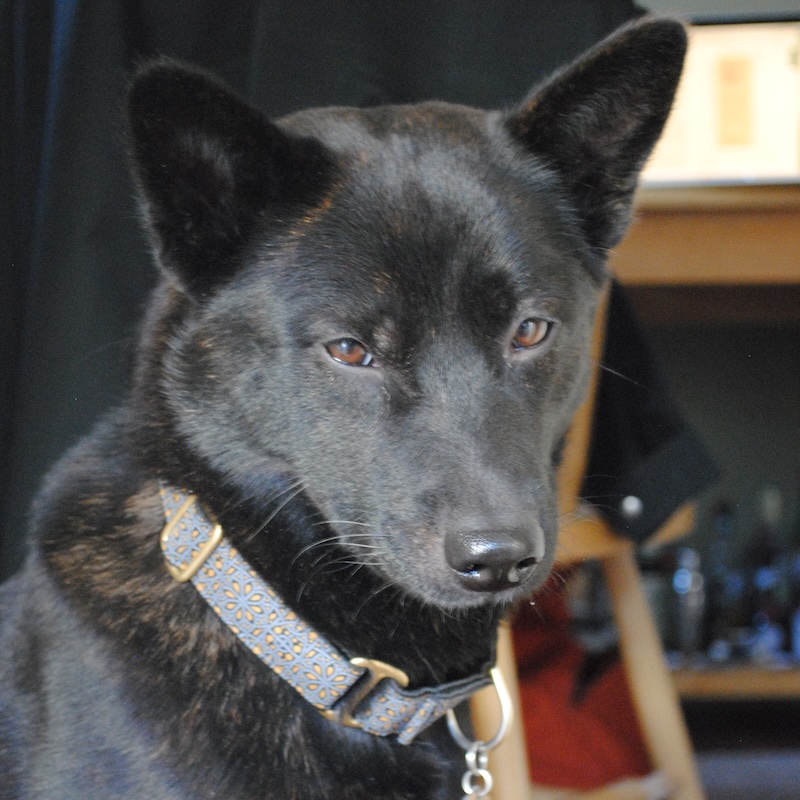
Kuromatsu
DogAlumni
- Aayushi Shah, High School Intern (2025-2026). Currently at UT Austin
- Ava Galek, Undergraduate Lab Assistant (2025-2026)
- Emily Yoon, SROP Researcher (2025). Currently at Williams College
- Molly Easton, Undergraduate Lab Assistant (2024-2025)
- Aouss Azzouz, SROP Researcher (2024). Currently at UPenn Medical School
PUBLICATIONS
2025
Urvoy, M., Howard-Varona, C., Owusu-Ansah, C., Stai, A. J., Bouranis, J. A., Burris, M., Solonenko, N., Hettich, R. L., Holmfeldt, K., Tfaily, M., Gowda, K., & Sullivan, M. B. (2025). Phage resistance mutations in a marine bacterium impact biogeochemically relevant cellular processes. Nature Microbiology, 11, 195–210. doi: 10.1038/s41564-025-02202-5
2024
Crocker, K., Lee, K. K., Chakraverti-Wuerthwein, M., Li, Z., Tikhonov, M., Mani, M., Gowda, K., & Kuehn, S. (2024). Environmentally dependent interactions shape patterns in gene content across natural microbiomes. Nature Microbiology, 9(8), 2022–2037. doi: 10.1038/s41564-024-01752-4
2023
Skwara, A., Gowda, K., Yousef, M., Diaz-Colunga, J., Raman, A. S., Sanchez, A., Tikhonov, M., & Kuehn, S. (2023). Statistically learning the functional landscape of microbial communities. Nature Ecology & Evolution, 7(11), 1823–1833. doi: 10.1038/s41559-023-02197-4
Diaz-Colunga, J., Skwara, A., Gowda, K., Diaz-Uriarte, R., Tikhonov, M., Bajic, D., & Sanchez, A. (2023). Global epistasis on fitness landscapes. Philosophical Transactions of the Royal Society B, 378(1877), 1–20. doi: 10.1098/rstb.2022.0053
2022
Gowda, K., & Kuehn, S. (2022). Microbial biofilms: An ecological tale of Jekyll and Hyde. Current Biology, 32(24), R1349–R1351. doi: 10.1016/j.cub.2022.10.068
Gowda, K., Ping, D., Mani, M., & Kuehn, S. (2022). Genomic structure predicts metabolite dynamics in microbial communities. Cell, 185(3), 530-546.e25. doi: 10.1016/j.cell.2021.12.036
Gopalakrishnappa, C., Gowda, K., Prabhakara, K. H., & Kuehn, S. (2022). An ensemble approach to the structure-function problem in microbial communities. iScience, 25(2), 103761. doi: 10.1016/j.isci.2022.103761
2020
Fraebel, D. T., Gowda, K., Mani, M., & Kuehn, S. (2020). Evolution of Generalists by Phenotypic Plasticity. iScience, 23(11), 1–22. doi: 10.1016/j.isci.2020.101678
PhD
Gandhi, P., Werner, L., Iams, S., Gowda, K., & Silber, M. (2018). A topographic mechanism for arcing of dryland vegetation bands. Journal of the Royal Society Interface, 15(147). doi: 10.1098/rsif.2018.0508
Gowda, K., Iams, S., & Silber, M. (2018). Signatures of human impact on self-organized vegetation in the Horn of Africa. Scientific Reports, 8(1), 1–8. doi: 10.1038/s41598-018-22075-5
Gowda, K., Chen, Y., Iams, S., & Silber, M. (2016). Assessing the robustness of spatial pattern sequences in a dryland vegetation model. Proceedings of the Royal Society A, 472(2187). doi: 10.1098/rspa.2015.0893
Gowda, K., & Kuehn, C. (2015). Early-warning signs for pattern-formation in stochastic partial differential equations. Communications in Nonlinear Science and Numerical Simulation, 22(1–3), 55–69. doi: 10.1016/j.cnsns.2014.09.019
Gowda, K., Riecke, H., & Silber, M. (2014). Transitions between patterned states in vegetation models for semiarid ecosystems. Physical Review E, 89(2), 1–8. doi: 10.1103/PhysRevE.89.022701